Payoneer fees depend on which side of the payment you are on. A U.S. company pays 1% to fund its Payoneer balance by ACH (up to 3.99% by card) and up to 1% plus up to 4.00 USD to pay a contractor in another country from that balance. The contractor receives it free, pays 1.50 USD or 1.2% to 4% to withdraw to a bank, and pays a 29.95 USD annual fee only if the account receives under 6,000 USD in 12 months.
Payoneer fees at a glance
Every figure is from Payoneer's fees page (last updated January 1, 2026; checked November 16, 2026). Payoneer calls it an estimate of its most common fee structure; the Fees link inside each account shows the rates that apply.
| Fee | Listed amount | Who usually pays |
|---|---|---|
| Annual account fee | 29.95 USD, only if the account receives less than 6,000 USD in any 12 consecutive months | Account holder (often the contractor) |
| Receive from another Payoneer balance | Free | Nobody |
| Receive into a local-currency receiving account | Free | Nobody |
| Receive into a non-local-currency receiving account | 1% (minimum 1.00 USD) | Recipient |
| Payer funds by credit card | Up to 3.99% + 0.49 USD | Payer or recipient (see below) |
| Payer funds by ACH bank debit (U.S. only) | 1% | Payer or recipient (see below) |
| Fund your own balance by ACH (U.S. only) | 1% | Company |
| Fund your own balance by credit card | Up to 3.99% | Company |
| Pay a Payoneer user in the same country | Up to 4.00 USD | Sender |
| Pay a Payoneer user in another country | Up to 1% + up to 4.00 USD | Sender |
| Move money between your own currency balances | 0.50% | Account holder |
| Withdraw to a same-country bank account in local currency | 1.50 USD | Account holder |
| Withdraw in another case, with or without conversion | 1.2% to 4% | Account holder |
| Payoneer card annual fee | 29.95 USD | Cardholder |
Fees depend on locations, payment method and currencies, and some countries may have a registration fee.
Fees for the U.S. company paying
A company paying contractors through Payoneer usually does one of two things. (For the other routes, see our guide on how to pay international contractors.)
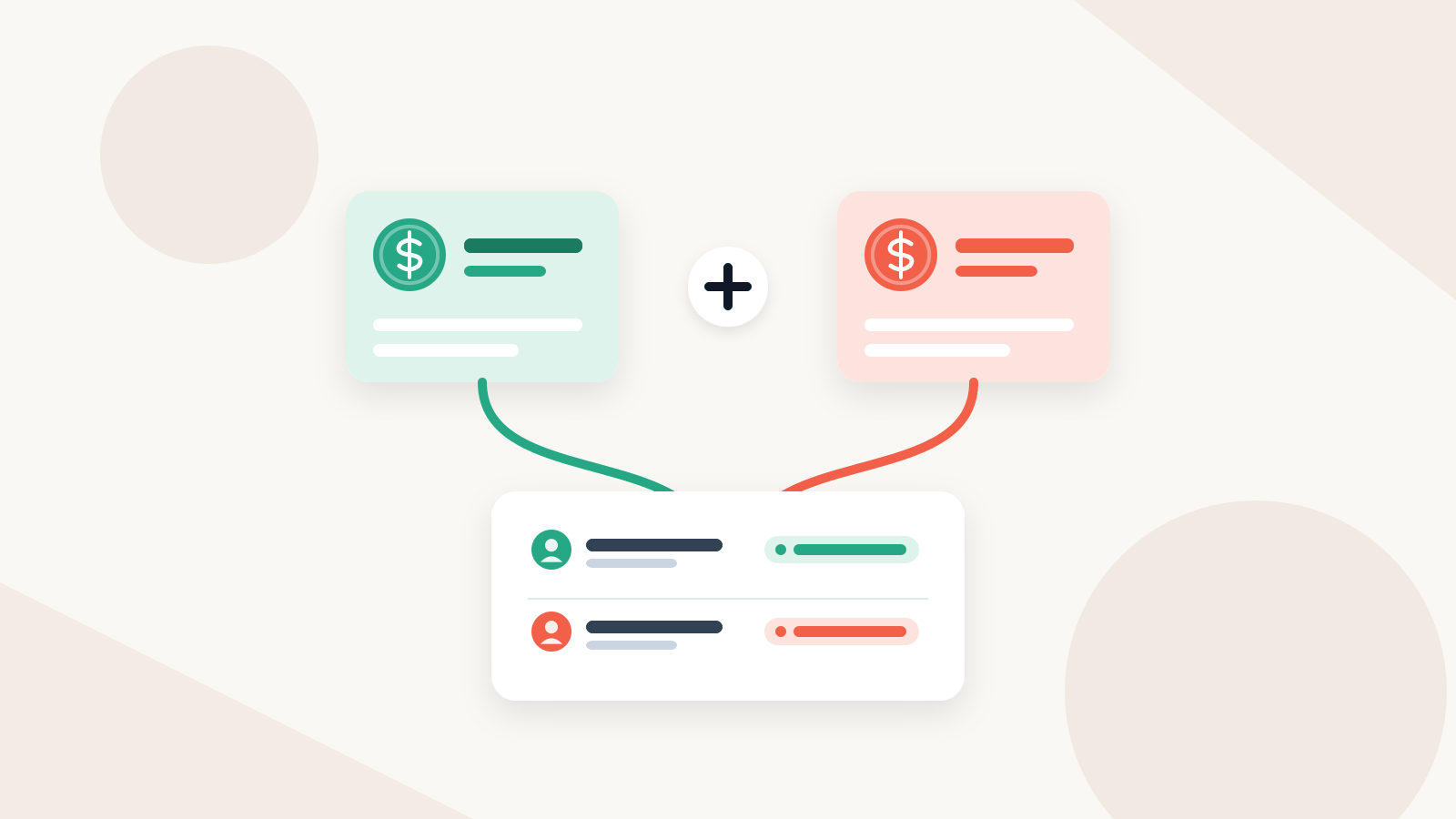
Pay from your Payoneer balance. You load your balance, then pay the contractor's Payoneer account. Loading by U.S. ACH is 1%, by card up to 3.99%, by PayPal up to 3.99% plus 0.49 USD. Paying a contractor abroad then falls under the cross-border line: up to 1% plus up to 4.00 USD.
Pay the contractor's payment request. The contractor sends you a request (an invoice) from their Payoneer account, and you pay it. Payoneer's help article for payers says you need a Payoneer account to send, which you can create during your first payment. Card is up to 3.99% (plus a fixed fee in some countries), ACH debit is 1%, and wire transfers are rejected. The same article says the payer can choose who pays the fee, unless the recipient or the requesting platform has already set that.
That choice matters. If your agreement promises the contractor a set amount, cover the fee yourself or gross up the payment. If it says nothing, decide before the first payment and write it down.
Fees for the contractor receiving
For the contractor, most Payoneer costs arrive after the money does.
- Receiving. Free from another Payoneer balance and into a local-currency receiving account. 1% (minimum 1.00 USD) into a receiving account in a currency that is not local to it.
- Holding a balance. No monthly fee is listed. The 29.95 USD annual account fee applies only below 6,000 USD received in any 12 consecutive months, which a regularly paid contractor usually clears.
- Converting. Payoneer says its conversion rates are based on wholesale market rates and include the conversion fee where indicated. There is no separate conversion line to read: the cost is in the rate. Moving money between your own currency balances is listed at 0.50%.
- Withdrawing to a bank. 1.50 USD to a bank account in the same country as the account, in local currency. Other withdrawals, including ones with currency conversion, are 1.2% to 4%. Payoneer also says some U.S. customers, depending on registration date, pay a fixed 1.50 USD per withdrawal or payment.
A contractor in Manila withdrawing a USD balance as pesos is converting, so the percentage rows apply, not the flat 1.50 USD. Our guide on paying contractors in the Philippines covers the other routes.
Payoneer card fees
The card is optional; its costs fall on the cardholder.
| Card fee | Listed amount |
|---|---|
| Card issuance (standard delivery) | Free |
| Annual card fee | 29.95 USD |
| Purchase without conversion | Up to 1.8% (free where the merchant and card country match) |
| Purchase with conversion | Up to 3.5% |
| ATM withdrawal | 3.15 USD plus up to 1.8% (up to 3.5% with conversion), plus any ATM operator fee |
| Replacement card | 12.95 USD |
Worked example: a 1,500 USD payment to a contractor
A sample, fictional case. Brightwell, a U.S. agency, pays Lia, a developer in the Philippines, 1,500 USD a month. Brightwell funds its Payoneer balance by ACH and pays Lia's Payoneer account; Lia withdraws pesos to her local bank. Where Payoneer lists "up to" or a range, the line says so; the real figure is in the Fees link.
| Step | Who pays | Fee line on Payoneer's schedule | On 1,500 USD |
|---|---|---|---|
| 1. Brightwell loads its balance by U.S. ACH | Brightwell | 1% | 15.00 USD |
| 2. Brightwell pays Lia's Payoneer account (different country) | Brightwell | Up to 1% + up to 4.00 USD | Up to 19.00 USD, per Payoneer's fee schedule |
| 3. Lia receives into her Payoneer balance | Nobody | Free | 0.00 USD |
| 4. Lia withdraws to her Philippine bank in pesos (with conversion) | Lia | 1.2% to 4% | 18.00 to 60.00 USD equivalent, per Payoneer's fee schedule |
| 5. Annual account fee | Lia | 29.95 USD only below 6,000 USD received in 12 months | Not charged: 18,000 USD a year received |
If Lia instead sends Brightwell a payment request and Brightwell pays it by card, steps 1 and 2 are replaced by the card line (up to 3.99% plus a fixed fee in some countries, so up to 59.85 USD before any fixed fee), and Brightwell chooses who carries it. The illustrative pattern: part of the cost usually lands on the contractor at withdrawal, so agree it up front.
Payoneer vs Wise for the same payment
On Wise Business (U.S.), the sending fee varies by currency and starts from 0.23%, Wise says it does not mark up the mid-market rate, and the fee appears in the quote before you send. The contractor receives straight into their bank account, so there is no withdrawal step. Wise lists a one-time 31 USD fee for its full Business features.
Payoneer tends to fit contractors already paid into a Payoneer balance by other clients; Wise fits contractors who want money in their local bank. Many teams use both. Our Wise vs Payoneer comparison goes through fees, rates, recipient setup and records side by side.
How to keep Payoneer fees down
- Fund by ACH, not card. 1% by ACH against up to 3.99% by card, from Payoneer's own table.
- Agree who pays which fee in the contractor agreement, and set it the same way on every payment request.
- Pay one larger amount rather than several small ones where the fixed parts (up to 4.00 USD per cross-border payment) add up.
- Have the contractor check their Fees link for their real withdrawal rate before choosing Payoneer over a direct bank payment.
- Check the U.S. fixed-fee tier. For certain U.S. customers (depending on registration date), Payoneer lists a fixed 1.50 USD per withdrawal or payment up to 50,000 USD a month, then up to 0.5%. Your Fees link shows whether it applies to you.
Where RemiPay fits
Payoneer payments never pass through RemiPay, and RemiPay adds no fee to them. It tracks hours, prepares the recurring pay run, records your approval and each payment's status, and exports the record. For a Payoneer contractor, you store their Payoneer details on their record, pay them in Payoneer using the approved amount, then mark the payment Sent (with the Payoneer reference) and Paid. Contractors you pay from Wise, PayPal or bank sit in the same run and CSV export. RemiPay charges only its subscription (Solo $19 for up to 3 contractors, Starter $49 for up to 10, Team $199 for up to 50); Payoneer's fees are Payoneer's. See RemiPay vs Payoneer for how the two fit together, and the pricing page for plans.
If the person is really an employee rather than a contractor, a payments account is the wrong tool; see what an employer of record is.
Common questions
Does Payoneer charge an annual fee? Payoneer lists a 29.95 USD annual account fee that applies only if the account receives less than 6,000 USD or equivalent in any 12 consecutive months. A separate 29.95 USD annual fee applies to the Payoneer card.
Is receiving money on Payoneer free? From another Payoneer balance or into a local-currency receiving account, yes. A non-local-currency receiving account is 1% (minimum 1.00 USD), and client payments by card, ACH debit or PayPal carry a fee the payer can often assign.
What is the Payoneer withdrawal fee? 1.50 USD to a same-country bank account in local currency, and 1.2% to 4% for other withdrawals, with or without conversion. Some U.S. customers pay a fixed 1.50 USD, depending on registration date.
Who pays Payoneer fees, the client or the contractor? Both, at different steps. The company pays to fund its balance and to send from it. The contractor pays withdrawal, conversion, card and any annual account fee. For a payment request, the payer can choose who pays the fee unless the recipient or platform has set it.
Does Payoneer charge a currency conversion fee? Payoneer says its rates are based on wholesale market rates and include the conversion fee where indicated, so the cost sits in the rate. Moving money between your own currency balances is 0.50%.
Related guides
- Wise vs PayPal for paying contractors abroad: fees, exchange rates and speed
- Wise fees for U.S. businesses in 2026: sending, receiving, card and how to read a quote
Sources
- Payoneer, fees (last updated January 1, 2026): https://www.payoneer.com/fees/
- Payoneer Help, how to pay a Payoneer user via request a payment (information for payers): https://payoneer.custhelp.com/app/answers/detail/a_id/17183/~/how-to-pay-a-payoneer-user-via-the-request-a-payment---information-for-payers
- Wise, Wise Business pricing (U.S.): https://wise.com/us/pricing/business/
Checked November 16, 2026
Payoneer says its page is an estimate and that each account's Fees link shows the rates that apply; check it, and the quote shown before you confirm, for your currency and amount.
Next steps
- Compare the two most common routes in Wise vs Payoneer for contractor payments.
- Read the full guide to paying international contractors.
- Keep Payoneer and Wise payments in one record: see RemiPay vs Payoneer and the pricing page.
Posts from the RemiPay editorial team. Have a question or topic request? Email hello@remipay.co.